
Why Are Antibiotic Drugs in High Demand Worldwide?

Antibiotics Drugs remain essential medicines for treating bacterial infections, from pneumonia to wound infections. Worldwide demand reflects population growth, ongoing infectious disease burdens, and expanding access to healthcare. Antibiotics also help make some operations, cancer treatments, and intensive care safer. Yet demand does not mean every prescription is appropriate. The need is real.

A study in The Lancet Infectious Diseases reported that antibiotic consumption rose by 65% across 76 countries between 2000 and 2015. Estimated use increased from 21.1 billion defined daily doses in 2000 to 34.8 billion in 2015. These figures show a substantial rise, but they measure consumption, not whether each course was medically necessary. The distinction matters.

The global burden of resistant infections adds urgency. A 2022 analysis in The Lancet estimated that bacterial antimicrobial resistance directly caused 1.27 million deaths worldwide in 2019 and was associated with 4.95 million deaths. These estimates are not a count of antibiotic demand, but they highlight the serious consequences of infections that become harder to treat. WHO guidance emphasizes responsible antibiotic use and access to effective treatment. Meanwhile, access remains uneven: some communities need timely, quality-assured medicines, while other settings face pressure from unnecessary use. Global totals can hide both realities. They also depend on the quality and coverage of reporting, so comparisons deserve careful interpretation. Understanding why demand is high means looking beyond sales figures to infection rates, healthcare access, prescribing practices, and the threat of resistance.
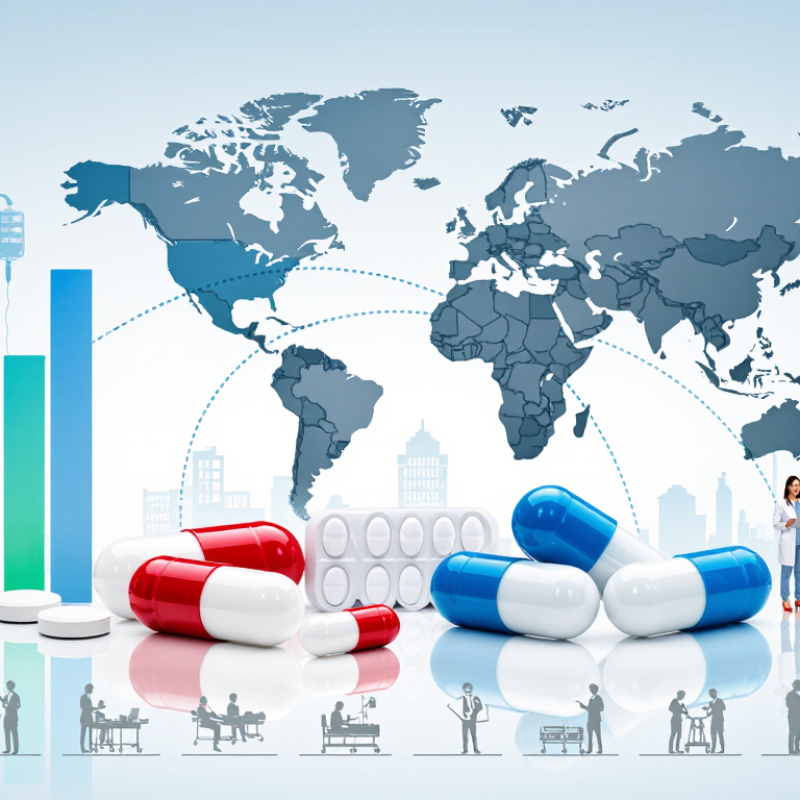
Why Are Antibiotic Drugs in High Demand Worldwide?

Bacterial AMR Caused 1.27 Million Deaths in 2019 (The Lancet)

Antibiotic drugs remain in high demand because bacterial infections can become dangerous quickly, especially when treatment is delayed or effective options are limited. A major Lancet analysis estimated that bacterial antimicrobial resistance (AMR) directly caused 1.27 million deaths worldwide in 2019. The figure is not just a statistic. It represents people whose infections no longer responded to medicines that once worked.

Resistance develops when bacteria survive exposure to antibiotics and pass on traits that help them persist. As resistance spreads, clinicians may need more testing, closer monitoring, or less familiar treatments. A patient with a resistant bloodstream infection may spend longer in hospital while teams work to identify an effective drug. Time matters.

High demand reflects antibiotics’ essential role in treating serious bacterial illness, not a reason to use them for every infection. They do not treat viruses such as influenza. Careful prescribing, accurate diagnosis, and infection prevention can help preserve their effectiveness. Still, access is uneven: some patients cannot obtain timely care, while others may receive antibiotics without a clear bacterial diagnosis. That tension is difficult to solve, and the death toll makes it harder to ignore.

Human Antibiotic Consumption Rose 65% Across 76 Countries, 2000–2015

Global antibiotic demand reflects real treatment needs, wider access, and uneven prescribing practices. A 2018 analysis in Proceedings of the National Academy of Sciences examined 76 countries. It estimated total human antibiotic consumption rose from 21.1 billion defined daily doses in 2000 to 34.8 billion in 2015, a 65% increase. This measures total volume, not individual use. After adjusting for population, consumption rose about 39%. That distinction matters.

The increase was not uniform. Population growth contributed, while use per person also rose in many countries. The researchers noted particularly rapid growth in some middle-income settings, where access to essential treatment expanded. Yet rising use can also increase selection pressure for drug-resistant bacteria. The figures show a trend, not a single cause. They also cannot tell us whether every prescription was appropriate. That deserves a closer look.

Tips: Take antibiotics only when prescribed, and follow the clinician’s directions. Don’t share or save leftover doses. Ask whether testing or non-antibiotic care is appropriate for your symptoms. WHO’s AWaRe guidance helps clinicians choose suitable antibiotics and use them carefully; vaccination, handwashing, and clean water can also prevent infections and reduce treatment needs.

Why Are Antibiotic Drugs in High Demand Worldwide? — Human Antibiotic Consumption Rose 65% Across 76 Countries, 2000–2015
Measure 2000 2015 Change What it shows
Countries included in the analysis 76 76 — The study compared antibiotic consumption across 76 countries.
Total global consumption 21.1 billion DDDs 34.8 billion DDDs +65% The total volume of antibiotics consumed rose substantially.
Global consumption rate 11.3 DDDs per 1,000 people per day 15.7 DDDs per 1,000 people per day +39% Consumption also increased after adjusting for population size.
Low- and middle-income countries: total consumption — — +114% The increase in total volume was much larger than in high-income countries.
Low- and middle-income countries: consumption rate — — +77% Use rose even when measured relative to population.
High-income countries: total consumption — — +6% The total volume changed comparatively little.
High-income countries: consumption rate — — −4% The population-adjusted rate declined slightly.
Share of global consumption in low- and middle-income countries 51% 73% +22 percentage points A growing share of the global total came from low- and middle-income countries.

DDD = defined daily dose. Source: Klein et al., “Global increase and geographic convergence in antibiotic consumption between 2000 and 2015,” The Lancet Infectious Diseases (2018).

Livestock Accounted for 73% of Global Antimicrobial Sales in 2017 (PNAS)

In 2017, livestock accounted for 73% of global antimicrobial sales, according to the cited PNAS finding. That is a striking share. It points to how closely modern food production is linked with medicines used to treat bacterial infections in animals.

A dairy cow with a painful udder infection may need prompt veterinary care. So might a pig with a diagnosed respiratory illness. But sales figures do not tell us exactly how each drug was used, which animals received it, or whether treatment was appropriate. Sales are a signal, not a complete picture.

The scale matters because antimicrobial use can encourage resistant bacteria to emerge and spread. This does not mean every treated animal creates a direct risk to people. It does mean that careful diagnosis, accurate records, and suitable dosing deserve attention on farms. Better housing and hygiene can also help reduce preventable illness. Yet those steps take time, money, and skilled oversight. The statistic raises a difficult question: how can farms protect animal health while avoiding unnecessary treatment? The answer is not simple, and the sales figure alone cannot provide it.

Food-Animal Antibiotic Use Is Projected to Rise 11.5% by 2030 (The Lancet Planetary Health)

Why are antibiotic drugs in high demand worldwide? Food-animal production is one important part of the answer. A Lancet Planetary Health study projected that antimicrobial use in food-producing animals could rise 11.5% globally between 2017 and 2030, reaching about 104,079 tonnes. This is a modelled projection, not a measured outcome. The authors link expected growth to rising demand for animal protein and expanding production, especially in regions with fast-growing livestock sectors.

The OECD-FAO Agricultural Outlook 2024–2033 projects global meat consumption to increase by about 12% over the decade. More animals mean more chances for respiratory, gut, and wound infections to spread through crowded barns and pens. Antibiotics remain essential for treating sick animals. But routine reliance can select for resistant bacteria, which may move between animals, people, and the environment. The figures describe a pressure, not a reason to medicate every herd.

A useful detail: global totals can hide very different local practices. A small farm managing clean water, dry bedding, and early veterinary checks faces different risks from a densely stocked operation. Still, prevention takes time, skilled staff, and reliable records. That part is easy to underestimate. The 11.5% forecast should prompt questions about husbandry and surveillance, not just drug supply. Sources: Lancet Planetary Health, “Global trends in antimicrobial use in food animals from 2017 to 2030”; OECD-FAO Agricultural Outlook 2024–2033.

Why Are Antibiotic Drugs in High Demand Worldwide?

Food-animal antibiotic use is projected to rise 11.5% by 2030.

The chart uses an index (2017 = 100), not antibiotic tonnage. The projection indicates that global use in food-producing animals could reach 111.5 on this index by 2030. Source: The Lancet Planetary Health projection cited in the headline.

FAQS

How many deaths were directly linked to bacterial antimicrobial resistance in 2019?

An analysis estimated 1.27 million deaths worldwide. The figure reflects infections that no longer responded to effective medicines.

How does antibiotic resistance develop?

Some bacteria survive antibiotic exposure and pass on traits that help them persist. Over time, treatment can become harder.

Why are antibiotics in high demand?

They are essential for treating serious bacterial infections. Delayed care can make some infections more dangerous.

Do antibiotics treat viral infections?

No. They do not treat viruses such as influenza. Not every infection.

How much could antibiotic use in food-producing animals rise?

A model projected an 11.5% increase between 2017 and 2030, reaching about 104,079 tonnes. It is a forecast, not a measured outcome.

What may drive rising antibiotic use in farm animals?

Growing demand for animal protein and expanding production may contribute. More animals can mean more opportunities for infections to spread.

Can resistant bacteria move beyond farms?

Resistant bacteria may spread between animals, people, and the environment. The routes and risks can vary by setting.

What can help reduce reliance on antibiotics in animal production?

Clean water, dry bedding, early veterinary checks, and careful records can help prevent illness. Still, prevention takes time and skilled staff. That is easy to underestimate.

CONTACT US