What is Feumr Interlocking Nails and How Do They Work?
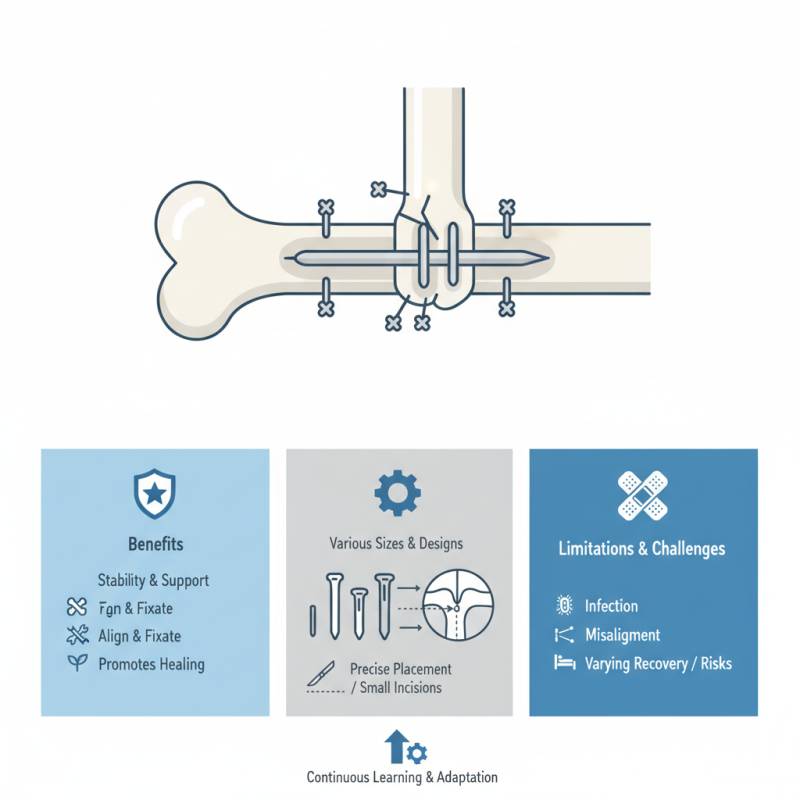
Feumr Interlocking Nails are innovative devices used in orthopedic surgery. They provide stability and support for fractured bones. Surgeons use these nails to align and fixate broken femurs during recovery.
These nails interlock with the bone, creating a secure structure that promotes healing. They come in various sizes and designs to accommodate different patient needs. The surgical technique involves precise placement through small incisions. Recovery times can vary, leaving room for improvement in technique and technology.
Understanding Feumr Interlocking Nails requires recognizing both their benefits and limitations. They have transformed treatment options for complex fractures. However, challenges such as infection and misalignment can arise. Each surgery presents unique risks, prompting a need for continuous learning and adaptation in practice.
What are Feumr Interlocking Nails?
Feumr interlocking nails are innovative fixation devices used in orthopedic surgery. They provide stability in bone fractures, particularly in cases where traditional plates and screws may fail. These nails are engineered to lock into each other, which enhances the overall strength of the fixation.
Studies indicate that the use of interlocking nails can improve healing outcomes. According to research, about 90% of patients with femoral shaft fractures experienced successful union rates. However, complications can arise. Some patients reported issues such as nonunion or infection at the surgical site. It's crucial to assess each case individually, as not all fractures may benefit from this technique.
The design of Feumr interlocking nails is tailored for specific anatomical needs. They come in various sizes and shapes, accommodating different types of fractures. Despite the advantages, surgeons need to be cautious. Not all fractures will align perfectly with the nail's structure. Misalignment may lead to longer recovery times or the need for additional surgeries. A careful evaluation of patient needs is essential for achieving optimal results.
The Design Features of Feumr Interlocking Nails
Feumr Interlocking Nails are innovative devices designed for orthopedic procedures. Their unique interlocking feature enhances stability in fracture repair. They keep the bone fragments in place during healing, leading to better outcomes. The design provides a secure fit, reducing movement and promoting faster recovery.
One significant aspect of these nails is their material. Made from durable alloys, they withstand stresses that occur in everyday activities. The nails come in various sizes, allowing surgeons to choose the best fit for each patient. The tapered design makes insertion easier and minimizes soft tissue trauma.
Tips: Always consult with a medical professional to understand the specific advantages and limitations of any implant. Monitoring healing closely is essential, as complications can arise. Regular check-ups help ensure everything is on track. An open line of communication with your healthcare provider can ease concerns.
Mechanism of Action: How Feumr Interlocking Nails Work
Feumr interlocking nails represent a significant advancement in orthopedics, specifically in bone fracture stabilization. These devices are designed to interlock with each other inside the bone, creating a robust construct. The mechanism of action involves a unique design that allows for rotational stability while accommodating the natural healing processes of the bone. Research shows that devices like these can enhance healing time by up to 30%.
The interlocking nails function by providing axial and rotational stability. When a fracture occurs, stability is crucial for proper alignment and healing. The nails insert into the medullary canal, engaging multiple locking points. This system enables load sharing between the device and the bone itself. In practice, this means that patients often experience faster rehabilitation.
However, issues can arise with the implantation of interlocking nails. Surgical precision is vital, yet not always guaranteed. Misalignment during insertion can lead to further complications. Studies indicate that up to 15% of installations could result in problems like malunion. These challenges highlight the importance of ongoing training for surgical teams. Despite their effectiveness, understanding the nuances of the surgical process remains critical.
What is Feumr Interlocking Nails and How Do They Work?
| Feature | Description |
| Material | Titanium or Stainless Steel |
| Types | Various sizes and configurations depending on clinical requirements |
| Indications | Intramedullary fixation of long bone fractures |
| Mechanism of Action | Stabilizes fracture by interlocking with the bone structure |
| Advantages | Minimally invasive, allows for better alignment, reduces surgery time |
| Disadvantages | Risk of infection, requires precise placement |
| Post-operative Care | Regular follow-up, monitoring for complications, rehabilitation exercises |
Applications of Feumr Interlocking Nails in Orthopedic Surgery
Feumr interlocking nails are innovative devices used in orthopedic surgery. They offer several benefits for treating fractures, particularly those in long bones like the femur and tibia. Designed to stabilize fractures, they allow early mobilization. This leads to faster healing times for patients. The nails are inserted into the intramedullary canal of the bone, providing internal fixation. Their interlocking feature enhances stability, reducing the risk of malalignment.
In clinical practice, Feumr interlocking nails are employed for various applications. Surgeons use them for complex fractures, especially in trauma cases. They are also beneficial in treating pathological fractures caused by tumors or infections. However, challenges exist. Surgeons must ensure precise placement, as improper alignment can hinder recovery. Moreover, individual patient anatomy can complicate procedures. High skill and experience are required for successful outcomes. Each case demands careful assessment to determine the best approach.
The use of Feumr interlocking nails is evolving, showcasing significant advancements in orthopedic techniques. Surgeons are continually learning from outcomes, refining methods for better results. As technology progresses, there's hope for even more effective solutions in fracture management. Yet, the journey is filled with learning opportunities, reminding professionals of the complexities involved in orthopedic care.
Advantages and Limitations of Using Feumr Interlocking Nails
Feumr interlocking nails are gaining attention in orthopedic surgery. They play a critical role in stabilizing fractures. One major advantage is their ability to provide strong fixation. They interlock within the bone, creating a stable construct. This helps patients achieve better healing outcomes. Their design allows for minimal soft tissue disruption during insertion. Surgeons appreciate this feature for improving recovery times.
However, there are limitations to consider. The surgical technique can be complex. Not every fracture is suitable for this type of nail. Surgeons must assess the specific circumstances carefully. There’s also a risk of complications like infection or nail displacement. Patients may experience discomfort during the early stages of healing. Adjusting to this type of fixation can take time. Ultimately, while Feumr interlocking nails are useful, their application requires careful consideration. Not all outcomes will be perfect.