What is Electric Resistance Welded Technology and Its Benefits?
Electric Resistance Welded technology, often referred to as ERW, plays a crucial role in modern manufacturing. It is widely used in various industries, including construction and automotive. This welding method is notable for its efficiency and precision. The process involves applying a current to metal pieces, generating heat at the joint. The result is a strong bond that enhances the overall integrity of the product.
One significant benefit of Electric Resistance Welded systems is their speed. The welding process can be completed rapidly. This efficiency translates into reduced production times and costs. Additionally, ERW allows for high levels of automation, which can further streamline operations. However, companies must consider factors like equipment costs and training for staff. While ERW offers many advantages, its implementation can be challenging for some organizations.
In summary, Electric Resistance Welded technology presents valuable benefits for manufacturers. Its capacity for quick, efficient, and reliable welding makes it a preferred choice in numerous applications. As industries continue to evolve, understanding the specific advantages and challenges of ERW technology will be essential for sustained growth and innovation.
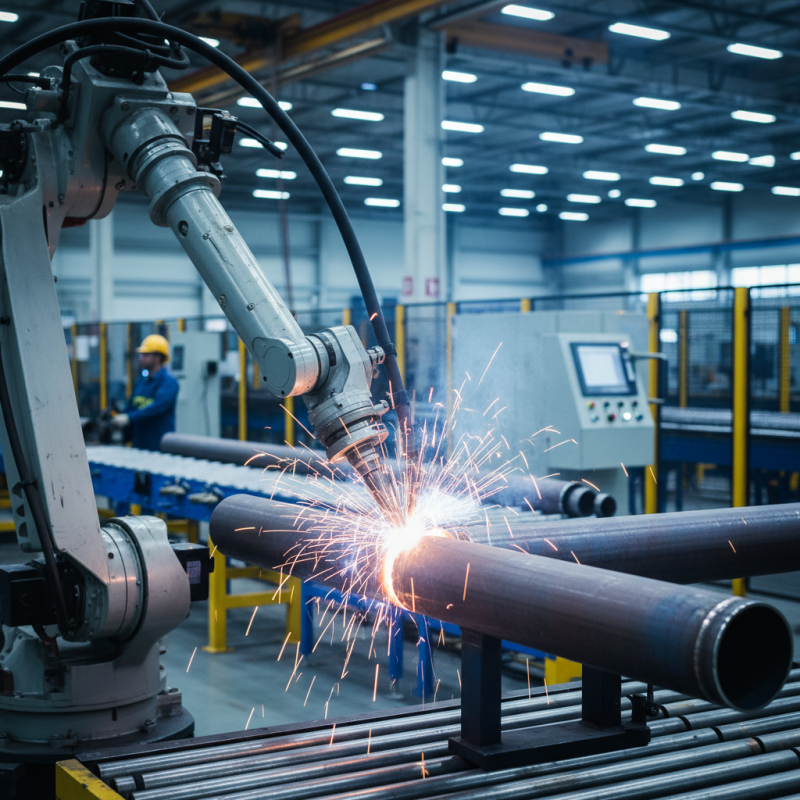
What is Electric Resistance Welding?
Electric Resistance Welding (ERW) is a process that joins materials through the application of heat generated by electric resistance. In this method, two metal surfaces are pressed together while an electric current passes through them. This generates heat sufficient to create a weld without requiring additional filler material. ERW is typically used in the manufacture of pipe and tubing, as well as in structural applications. According to a report by the American Welding Society, ERW accounts for nearly 40% of the welded products in the market today.
One of the key benefits of ERW is the speed of production. This technique allows for high-volume manufacturing, which can reduce costs significantly. A study by the Welding Research Council highlights that ERW has a processing speed of up to 24 meters per minute. However, this speed can sometimes lead to inconsistencies if proper quality controls are not implemented. The energy efficiency of ERW is another advantage, as it requires less energy compared to other welding methods. However, the challenge lies in ensuring consistent weld quality and addressing issues such as distortion that may arise from heat generation.
The flexibility of Electric Resistance Welding is notable. It can be employed with various types of metals, including steels and aluminum. However, not all metals perform well in ERW processes. Material selection is crucial, as certain alloys may not achieve the same quality junctions. While ERW presents exciting opportunities for innovation in manufacturing, it requires careful consideration of material properties and welding parameters to optimize results.
Principles and Mechanism of Electric Resistance Welding
Electric Resistance Welding (ERW) is a process that joins materials through resistance heating. This technology uses electrical resistance to generate heat at the weld interface. Two metal pieces are pressed together, and the current flows through them. The resistance leads to localized heating, which melts the material and forms a strong bond. The simplicity of this process is appealing, but it requires careful control of parameters to achieve optimal results.
The principles of ERW hinge on the concepts of heat intensity and pressure. Heat is generated when electrical current passes through the resistance present at the welding area. The effective combination of heating time and applied force is crucial for achieving a durable weld. Factors like material thickness and types affect the weld quality. Sometimes, the results can be inconsistent due to variations in these factors.
Understanding the mechanism is vital for engineers and operators. They must ensure proper settings are in place. If not, weld defects like incomplete fusion or weak joints may occur. This demand for precision is both a challenge and an opportunity for innovation in the industry. Experimentation and experience guide improvements. ERW technology can lead to efficient production but may require time to master fully.
What is Electric Resistance Welded Technology and Its Benefits? - Principles and Mechanism of Electric Resistance Welding
| Aspect | Description |
| Definition | Electric Resistance Welding (ERW) is a welding process that uses the heat generated by electrical resistance to join materials, typically metal sheets or tubes. |
| Principle | The process involves the application of pressure and electric current, which creates heat at the interface of the materials, causing them to melt and fuse together. |
| Applications | Commonly used in the automotive, construction, and manufacturing industries for joining thin-walled tubes and sheets. |
| Advantages | High speed, reduced material waste, lower energy consumption, and strong welds with consistent quality. |
| Limitations | Not suitable for thicker materials, requires precise control of parameters, and potential for surface oxidation. |
| Recent Developments | Advancements in automation and sensors to improve precision and allow for real-time monitoring of the welding process. |
Benefits of Electric Resistance Welding in Manufacturing
Electric Resistance Welding (ERW) technology has transformed manufacturing processes by providing a means to create strong, efficient, and reliable connections. This method uses electricity to heat metal surfaces until they are pliable, allowing them to be fused together without additional materials. The final product is robust and has consistent quality.
One of the most significant benefits of ERW is efficiency. The process is rapid, reducing production time significantly. This can lead to lower costs and increased throughput. Additionally, the welds created are often free from defects, enhancing the reliability of the final product. However, achieving this quality requires careful control of the welding parameters.
Tips: Focus on maintaining a consistent electrical current. Changes in current can lead to undesirable welds. It can help to monitor the temperature closely during the process. Regular maintenance of your equipment is crucial. This will ensure optimal performance and reduce the potential for failures.
Another advantage is versatility. ERW can be used on various materials, including steel and aluminum. This flexibility makes it suitable for different manufacturing applications. Yet, understanding the limitations is crucial. Not all designs lend themselves to ERW, and improper use can lead to weak joints. Always analyze the design requirements before choosing this method.
Industry Applications of Electric Resistance Welding Technology
Electric resistance welding (ERW) technology finds widespread use across various industries. This efficient process is integral in manufacturing fields such as automotive, construction, and appliance production. In the automotive sector, ERW is commonly used to create strong joints in vehicle frames and components. This enhances safety and structural integrity, creating vehicles that can withstand impact.
The construction industry also benefits from ERW technology. Steel pipes, tubes, and structural sections are often manufactured using this process. These materials provide durability and support for buildings and bridges. The ability to produce long lengths of welded sections reduces material waste. This makes ERW an appealing choice for projects focusing on sustainability.
Despite its many advantages, there are challenges in adopting ERW. Variability in material thickness can lead to inconsistent weld quality. Proper training and equipment maintenance are essential for achieving reliable results. Additionally, the initial investment in ERW machinery can be significant. Companies must weigh the long-term benefits against these initial costs. Ultimately, the effectiveness of ERW in different applications showcases its vital role in modern manufacturing.
Comparative Analysis of Electric Resistance Welding with Other Welding Methods
Electric resistance welding (ERW) stands out in the welding landscape for its efficiency. Compared to traditional methods like MIG and TIG welding, ERW offers faster production rates. According to a report by the American Welding Society, ERW can increase manufacturing efficiency by up to 50%. This is largely due to its continuous welding process, which minimizes downtime.
However, ERW is not without its drawbacks. While it excels in joining thin sheets, it may not be suitable for thicker materials. A study by the International Institute of Welding highlights limitations in penetration depth, leading to concerns about the strength of the weld in demanding applications.
Additionally, ERW generates heat primarily through electrical resistance, which means controlling heat input is crucial. Poor control can lead to various issues, including material distortion and reduced weld integrity. Despite its benefits, understanding these limitations is essential for choosing the right welding method for specific projects.
Comparative Analysis of Electric Resistance Welding with Other Welding Methods