
How to Choose Orthopedic Spine Implants for Your Needs

Choosing Orthopedic Spine Implants is not a matter of picking the newest device or the one with the most impressive brochure. The right choice depends on the diagnosis, spinal anatomy, bone quality, activity level, and goals of treatment. A small difference in screw placement or implant shape can matter when a surgeon is working near delicate nerves. So can recovery expectations.

Orthopedic spine surgeon Dr. Richard D. Guyer’s clinical perspective can be summarized in this principle: “An implant should fit the patient’s condition and goals, not the other way around.” This is a paraphrase, not a verified verbatim quotation. It reflects an important point: implants are tools within a broader treatment plan, and no single design suits every patient. Choices may include rods, screws, cages, or other devices, depending on the procedure and clinical need.

This guide explains how to compare implant materials, design features, evidence, and surgeon recommendations. It also highlights questions worth asking, such as how a device supports stability and what follow-up care may involve. Bring your imaging and a written list of concerns to the consultation. Details matter. Still, implant selection is not always straightforward; research can be limited, and personal preferences do not replace clinical judgment. A qualified spine specialist can explain the trade-offs and help you make an informed decision.
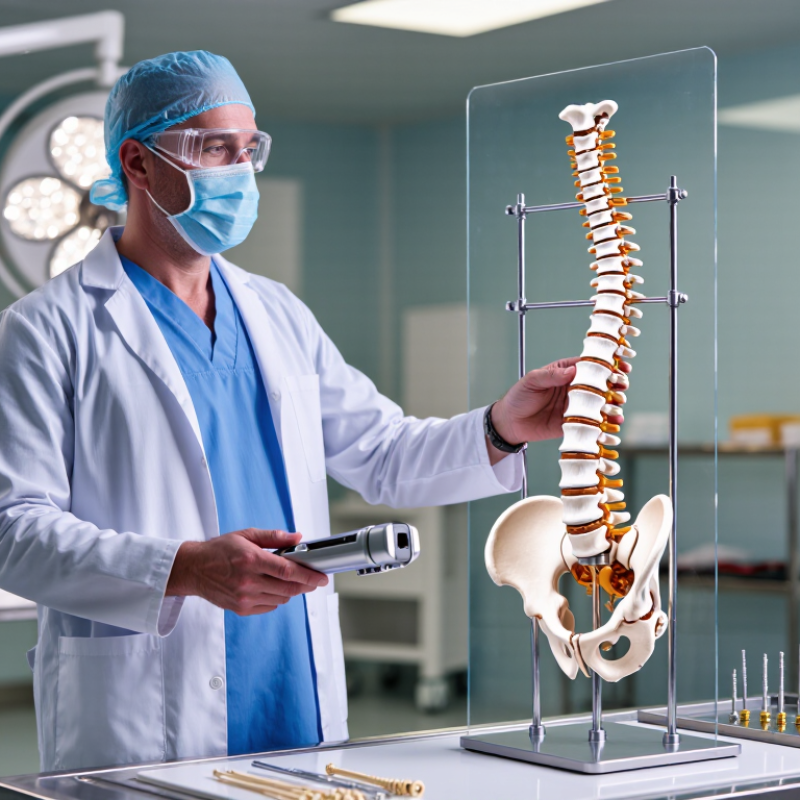
How to Choose Orthopedic Spine Implants for Your Needs

Understanding the Purpose of Orthopedic Spine Implants

How to Choose Orthopedic Spine Implants for Your Needs

Understanding the Purpose of Orthopedic Spine Implants

Orthopedic spine implants are devices used to support or stabilize parts of the spine during treatment. Their purpose depends on the condition being treated, not simply on the location of back pain. Screws and rods can hold vertebrae steady while bones fuse. Interbody cages may support the space between vertebrae and help maintain alignment. Artificial discs are designed to preserve motion for some carefully selected patients.

The right device depends on anatomy, bone health, symptoms, and the proposed procedure. A surgeon may review imaging to assess disc height, spinal alignment, and the strength of nearby bone. For example, a cage may be considered when a damaged disc is removed, while rods and screws may be needed to limit movement during fusion. An implant can provide support, but it does not guarantee pain relief.

Not always.

Before deciding, ask what the implant is meant to do, what alternatives exist, and how the choice fits your diagnosis. Recovery may involve activity limits and follow-up visits, often with imaging to check healing. It is reasonable to ask how bone quality or other health conditions could affect the plan. These devices are not interchangeable, and even a sensible choice can involve trade-offs. A qualified spine specialist can explain those trade-offs for your individual case.

Exploring Common Types of Spine Implants

How to Choose Orthopedic Spine Implants for Your Needs

Common spine implants serve different purposes. Pedicle screws and connecting rods stabilize vertebrae, often during fusion surgery. They may hold a spinal segment steady while bone grows across it. The fit matters.

Interbody cages sit between vertebrae after a damaged disc is removed. Their shape and height can help maintain spacing, but placement and bone quality also matter. A cage that looks suitable on an image may not suit every patient’s anatomy.

Small plates and screws can stabilize the front of the neck after certain procedures. Artificial discs are another option for some people; they aim to preserve motion at the treated level. Not always. Severe joint changes or other health factors may make them unsuitable.

Larger implants can replace part of a vertebral body when disease or injury has damaged it. Implant choice depends on the affected level, imaging, symptoms, bone strength, and the planned operation.

Ask the surgeon what each device is meant to do, what alternatives exist, and how recovery may differ. The trade-offs can be hard to compare, and no implant guarantees a particular result.

Assessing Your Diagnosis and Treatment Goals

Choosing an orthopedic spine implant should begin with a clear diagnosis, not a product feature. Ask what may be causing your symptoms: a compressed nerve, an unstable segment, a fracture, or another condition. Your clinician can compare examination findings with MRI, CT, or X-ray results. Images matter, but they do not explain every ache. Discuss how long symptoms have lasted, which activities trigger them, and what treatments you have tried. Your goals may include walking farther, sleeping better, or returning to work. Be specific.

If surgery is being considered, ask whether the plan aims to stabilize a spinal segment, relieve pressure on nerves, or support fusion. Ask why an implant fits your diagnosis and anatomy, and what non-surgical options remain. Bone health, smoking, other medical conditions, and daily activities may influence the discussion. An implant cannot guarantee pain relief. That can be disappointing, but it matters. Request a plain-language explanation of expected benefits, risks, recovery, and alternatives before deciding.

Tips: Bring a symptom timeline and medication list. Ask how the implant may affect movement, what restrictions to expect, and how progress will be measured. If you remain unsure, consider another qualified medical opinion.

How to Choose Orthopedic Spine Implants for Your Needs

Assessing your diagnosis and treatment goals helps determine whether an implant is appropriate—and which role it may serve.

How to read this chart: “May be considered” indicates a possible role in selected patients, not how often an implant is used or a recommendation for an individual. For example, screws and rods may stabilize a fusion, interbody cages may support fusion, artificial discs are used for motion preservation in selected patients, and cement augmentation may be used for certain vertebral compression fractures. Decompression for stenosis without instability often does not require an implant. Final choices depend on diagnosis, anatomy, bone health, and treatment goals.

Comparing Implant Materials, Benefits, and Risks

Choosing a spine implant means weighing material properties against the job it must do. Titanium alloys have an elastic modulus near 110 GPa, while PEEK is typically around 3–4 GPa; cortical bone is roughly 10–30 GPa. These commonly reported engineering ranges help explain why PEEK may reduce stiffness mismatch, while titanium can provide a strong, durable structure. ASTM F136 and ASTM F2026 specify material requirements for implant-grade titanium alloy and PEEK, respectively. Numbers matter, but implant shape and surgical technique matter too.

Imaging is another practical difference. PEEK is radiolucent, so clinicians can often assess bone growth with less material-related imaging interference. Titanium may create more artifact, though porous surfaces can support bone attachment. The trade-off is not simple. Peer-reviewed comparisons of interbody cages report varied fusion outcomes, and results depend on implant design, surgical approach, and patient health—not material alone. Infection, loosening, subsidence, and failure are possible with either material. A patient with weak bone may face different risks than an otherwise healthy adult.

A useful clinic question: “How will this material affect my follow-up scans?”

Ask about the specific implant’s evidence, too. I would not choose by material name alone; that shortcut misses the details. Comparative studies also have limits, including different patient groups and follow-up periods. A spine specialist can relate those findings to your imaging, bone quality, and goals.

Choosing an Implant with Your Spine Care Team

Choosing an orthopedic spine implant should begin with your diagnosis, not a catalogue. Ask your spine surgeon what problem the device is meant to solve. Will it stabilize a segment, replace a joint, or support a fusion? The answer depends on your symptoms, imaging, bone quality, activity, and prior treatment. Bring your scan reports and a list of medicines to the appointment. Small details count. Ask how the implant fits your anatomy, what alternatives exist, and what recovery may involve.

Bone health deserves a specific conversation. The Congress of Neurological Surgeons’ 2021 guideline, Preoperative Osteoporosis Assessment, identifies a DEXA T-score below -2.5, CT bone density below 97.9 Hounsfield units, and vitamin D below 20 ng/mL as indicators associated with higher risk of osteoporosis-related complications after spine surgery. These are risk signals, not a personal prediction. Ask whether you need testing or treatment before surgery, and how results could affect timing or implant fixation. It is easy to underestimate this step.

Your care team should explain benefits and trade-offs in plain language. Discuss expected restrictions, follow-up imaging, and what symptoms should prompt a call. If the recommendation feels unclear, ask for another explanation. I would not choose an implant based on a single feature; the whole plan matters.

CONTACT US