How to Cast Stainless Steel for Your Projects?
Casting stainless steel is a vital process in various industries, from automotive to aerospace. According to a recent report by Research and Markets, the global stainless steel casting market is projected to grow by 4.8% annually through 2026. This growth highlights its increasing importance across applications.
Dr. Emily Chen, an expert in metallurgy at the Steel Research Institute, emphasizes, "The versatility of cast stainless steel allows for innovative designs but requires precise techniques." However, achieving the right balance in casting can be challenging. Factors like temperature control and mold quality directly impact the final product.
Practical knowledge of casting techniques can be scarce. Many professionals may skip key steps, leading to wasted resources. As industries evolve, it’s crucial to stay updated and adapt. Continuous learning in casting stainless steel will pave the way for improved results and efficiency.
Understanding Stainless Steel Properties and Alloys for Casting
Stainless steel is a popular choice for casting due to its strength and durability. Understanding its properties is crucial for successful projects. Stainless steel consists mainly of iron, chromium, and nickel. These elements enhance resistance to corrosion and high temperatures. The most common alloy series for casting includes 303, 304, and 316, each offering unique benefits. According to the American Iron and Steel Institute, stainless steel's tensile strength often exceeds 70,000 psi, which makes it ideal for demanding applications.
When casting stainless steel, remember to control cooling rates. Rapid cooling can lead to brittleness. A balanced cooling approach ensures optimal mechanical properties. Also, consider the carbon content in your alloy. Higher carbon levels increase hardness but may reduce ductility. This can create challenges during fabrication, so choose your alloy wisely.
Tips: Maintain proper temperature during casting to mitigate defects. Ensure your molds are designed for thermal expansion. Always test smaller batches before full runs to identify potential issues early. Keep an eye on surface quality, as imperfections can affect performance. Reflect on the specific needs of your project before selecting an alloy. Make adjustments based on testing results for better outcomes.
Selecting the Right Casting Method for Your Stainless Steel Projects
When selecting the right casting method for stainless steel projects, consider the scale and complexity. Different methods suit different applications. Common methods include sand casting, investment casting, and lost foam casting. Each has its strengths and weaknesses. For example, sand casting is affordable but may require more finishing work.
Tips: Evaluate your project needs. Do you require high precision or are aesthetics the priority? Investment casting offers detail but is more expensive. It may not always be necessary for simple projects.
Also, think about the handling of molten steel. It’s crucial to have the right equipment. Proper safety measures ensure a smooth process. Always practice caution when dealing with high temperatures. Unexpected issues can arise, leading to mistakes and frustrations. Reflect on past experiences to guide your decisions.
How to Cast Stainless Steel for Your Projects?
| Casting Method | Description | Advantages | Disadvantages |
| Sand Casting | A process that uses sand as a mold material. | Cost-effective, suitable for large parts. | Lower surface finish, longer processing time. |
| Investment Casting | Involves creating a wax model and coating it with a ceramic shell. | High precision, excellent surface finish. | Higher cost, more complex setup. |
| Die Casting | Involves forcing molten metal into a mold cavity under pressure. | Good for high-volume production, excellent dimensional accuracy. | Limited to less complex shapes, higher initial costs. |
| Centrifugal Casting | Uses centrifugal force to distribute the molten metal in a mold. | Produces dense, strong parts, great for cylindrical shapes. | Limited to round shapes, complex setup. |
Preparing Molds and Patterns for Effective Stainless Steel Casting
Preparing molds and patterns is a crucial step in stainless steel casting. The right mold can determine the quality of your final product. Begin by selecting a material for your mold. Common choices include sand, metal, or ceramic. Each material has its own benefits and challenges. For instance, sand molds are easy to create but may not capture fine details.
Creating patterns is equally important. Patterns serve as the template for your mold. Use materials like wood or plastic to form the pattern. Ensure the pattern's dimensions are accurate. Any imperfections will show in the final cast. It’s vital to consider shrinkage as the stainless steel cools. Plan for this by adding extra material where needed.
Sometimes, things don’t go as planned. A mold may crack or a pattern may warp. Reflection is key here. Analyze what went wrong and adjust your processes. Maybe the mold was too thin, or you mixed materials improperly. With each attempt, your skills will improve. Embrace the learning curve in stainless steel casting.
Pouring and Cooling Techniques in Stainless Steel Casting
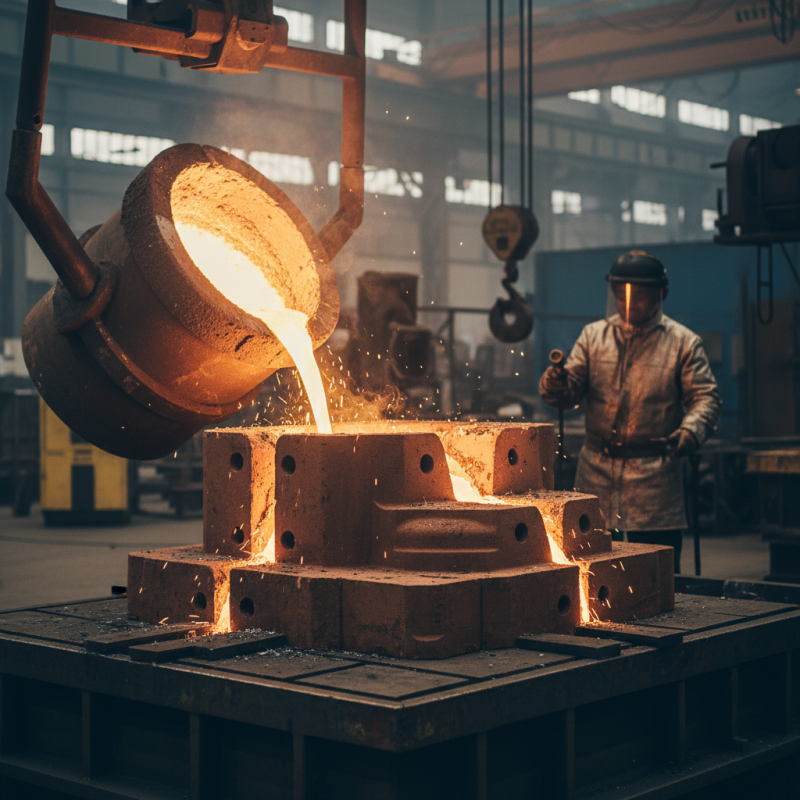
Pouring stainless steel requires precision. The temperature must be carefully monitored. Stainless steel melts at around 2,500°F (1,370°C). This high temperature presents unique challenges.
Cooling techniques are critical in this process. Controlled cooling prevents defects like cracking. It’s essential to maintain an even temperature. Rapid cooling can lead to brittleness in the final product. Industry reports indicate that up to 30% of defects arise from improper cooling methods.
Different alloys require specific cooling rates. For example, austenitic stainless steels cool slowly, while ferritic steels can withstand quicker cooling. Observing these nuances is vital for quality casting. Refining your pouring technique should involve trial and error. You may face issues with porosity or inclusions that need addressing. Embracing these challenges leads to a better understanding of the craft.
Finishing Processes for High-Quality Stainless Steel Castings
When casting stainless steel, finishing processes play a vital role in achieving high-quality results. After molding, the surface often has imperfections that require attention. Sanding and grinding are common methods used to smooth out rough edges. These techniques can be time-consuming and may not always yield a perfect finish on the first attempt.
Once the surface is prepared, polishing becomes essential. It enhances the appearance and provides a protective layer. However, achieving a mirror-like finish can be tricky. Many factors affect this process, including the material's initial quality and the tools used. Buffing pads and compounds help, but the results can vary. It's crucial to remain patient and adjust techniques accordingly.
After polishing, the final step often involves passivation. This chemical process helps to enhance corrosion resistance. However, misapplication can lead to uneven finishes. Tools and solutions should be tested carefully. Each finished piece may tell a different story, prompting reflection on what improvements could be made in future projects.