
7 Tips for Buying an 808 Nm Diode Laser
Choosing an 808 Nm Diode Laser requires more than comparing prices and advertised power. The right model should match your application, operating environment, and technical skill. Wavelength accuracy matters because small variations can affect performance, efficiency, and system compatibility. Output power also deserves careful attention. Higher power is not automatically better. It may increase heat, energy consumption, and cooling demands.
Look closely at beam quality, duty cycle, thermal management, and connector design. A well-built housing should protect sensitive components from dust, vibration, and accidental handling. Ask the supplier for test data, warranty terms, calibration records, and clear operating instructions. Reliable manufacturers explain their measurements instead of hiding behind impressive specifications. That detail can reveal a great deal.
Safety comes first.
The seven tips in this guide focus on practical decisions buyers often overlook. They cover application requirements, wavelength stability, power ratings, cooling systems, supplier credibility, documentation, and total ownership cost. These checks help separate a dependable 808 Nm Diode Laser from a product that only looks attractive online. Still, no checklist is perfect. Real installations may expose limitations that product pages do not mention, especially under continuous operation or changing temperatures. A cautious buyer should compare evidence, ask precise questions, and leave room for independent testing. Small details, such as a loose cable or unclear thermal specification, can become expensive problems later. અનુભવ
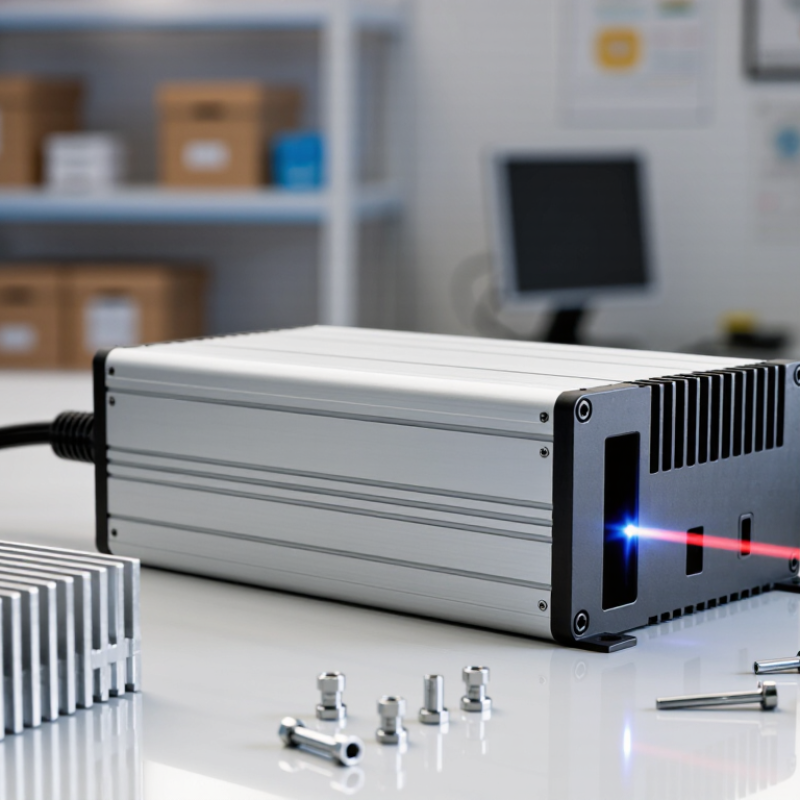
Verify 808 nm Wavelength, Output Power, and ±5 nm Spectral Tolerance
When buying an 808 nm diode laser, treat the wavelength as a measured value, not a marketing label. An acceptable ±5 nm spectral tolerance usually means emission between 803 and 813 nm. That range may suit general illumination or inspection, but it can be unsuitable for narrow-band filters or wavelength-sensitive sensors. Ask for a calibrated spectrometer report, including the test temperature and operating current. A clean datasheet is not enough.
Output power needs equal attention. Check whether the stated value means optical power at the diode window or after the lens. These numbers can differ noticeably. Request a measurement method, power meter model, test distance, and operating mode. Continuous-wave output should not be compared directly with pulsed output. Also inspect the thermal conditions. A diode tested on a cool laboratory bench may produce less power inside a warm enclosure.
I once trusted a power figure without checking the drive current. That was a mistake. The diode reached the advertised output, but its operating margin was uncomfortably small. Look for individual test data, not only typical values. Confirm wavelength and power at startup and after thermal stabilization. If the supplier cannot explain the ±5 nm limit, ask for clarification in writing. Small details matter.
7 Tips for Buying an 808 Nm Diode Laser - Verify 808 nm Wavelength, Output Power, and ±5 nm Spectral Tolerance
| No. | Verification Dimension | Recommended Specification | How to Verify | Buying Consideration |
|---|---|---|---|---|
| 1 | Center Wavelength | Nominal center wavelength: 808 nm | Request a test report showing the measured peak or center wavelength under the specified operating current and temperature. | A wavelength label alone is insufficient. Confirm whether the stated value is a nominal target, peak wavelength, or spectral centroid. |
| 2 | Spectral Tolerance | 803–813 nm for an 808 nm specification of ±5 nm | Use a calibrated optical spectrum analyzer or spectrometer to measure the emission spectrum at the intended operating point. | Ask whether the ±5 nm tolerance applies across the full temperature and drive-current range or only at room temperature and nominal power. |
| 3 | Optical Output Power | Select the required continuous-wave output, such as 100 mW, 500 mW, 1 W, or 2 W | Measure power with a calibrated optical power meter and suitable 808 nm sensor at the specified current, duty cycle, and temperature. | Differentiate between rated, typical, and maximum power. Confirm whether the rating is continuous-wave or pulsed operation. |
| 4 | Operating Current and Voltage | Verify the specified drive current, forward voltage, and current limit; typical diode forward voltage is approximately 1.5–2.5 V, depending on design and conditions. | Review the electrical datasheet and test the device with a regulated constant-current driver rather than a simple voltage source. | Excess current can cause rapid thermal damage. The driver should provide soft start, current limiting, and protection against transients. |
| 5 | Thermal Management | Use an appropriate heat sink or thermoelectric cooler; maintain the case or mounting temperature within the specified operating range, commonly around 10–40°C for controlled systems. | Check the thermal resistance, mounting method, duty cycle, and temperature limits in the technical documentation. | Temperature changes can shift the wavelength and reduce lifetime. A mechanically stable, low-resistance thermal path is essential for high-power operation. |
| 6 | Beam and Package Configuration | Confirm package type, emitter size, beam divergence, connector, and whether the device is a bare diode, fiber-coupled module, or collimated assembly. | Compare the mechanical drawing and beam specifications with the available optical mount, lens, fiber, and alignment hardware. | An 808 nm wavelength does not guarantee compatibility with every optical system. Divergence and coupling geometry strongly affect usable power. |
| 7 | Reliability, Documentation, and Safety | Require traceable test data, operating limits, warranty terms, expected lifetime information, and laser-safety documentation. | Check the datasheet revision, inspection records, compliance information, and recommended protective equipment and interlock requirements. | 808 nm infrared radiation is invisible and can cause serious eye injury. Use suitable eyewear, beam enclosures, interlocks, and controlled-access procedures. |
Compare 10–40 J/cm² Fluence, Pulse Width, and Cooling Performance
Choosing an 808 nm diode laser requires more than selecting the highest fluence. Compare 10–40 J/cm² carefully. Lower settings may suit sensitive skin or early sessions. Higher settings can improve energy delivery, but they also increase discomfort and thermal risk. Fluence alone proves very little.
Check pulse width beside fluence. Short pulses deliver energy quickly and may feel sharper. Longer pulses spread heat more gradually. The suitable choice depends on hair thickness, skin response, spot size, and treatment area. Ask for calibrated output data, not only screen readings. A 25 J/cm² display does not guarantee 25 J/cm² at the skin.
Cooling performance deserves equal attention. Look for stable contact cooling, consistent temperature, and fast recovery between shots. A cold sapphire window can reduce surface discomfort during repeated passes. Test the handpiece after several minutes, when poor cooling may become obvious. Watch for uneven cooling near the edges. That detail is easy to miss.
In practice, a patch test and clear treatment records are more reliable than impressive specifications. Record fluence, pulse width, skin response, and cooling settings for each session. Adjust gradually, and stop when the skin shows excessive redness, blistering, or prolonged heat.
Higher energy is not automatically better. Some comparisons still overlook operator training, which can change results more than a small specification difference.
Check 25–40% Wall-Plug Efficiency and Thermal Management Design
7 Tips for Buying an 808 Nm Diode Laser
Check wall-plug efficiency before comparing prices. It measures optical output against electrical input. For an 808 nm diode laser, 25–40% is a practical range. Ask whether the figure applies at room temperature, rated current, and continuous operation. A number without test conditions proves little. Request the wavelength tolerance, output stability, and measurement method. Small differences can affect operating costs over thousands of hours.
Thermal design deserves equal attention. Look for a copper heat path, a properly sized heatsink, temperature sensors, and controlled airflow. Some systems use thermoelectric cooling, but cooling capacity must match the electrical load. Examine the specified case temperature and derating curve. Seven useful checks include efficiency, thermal resistance, sensor placement, fan reliability, duty cycle, output drift, and service access. Keep the diode junction cool. It protects lifetime and wavelength stability.
I once focused too heavily on peak power and overlooked heat removal. That was a costly lesson. A laser may reach its advertised output briefly, then drift as the housing warms. Measure the case temperature after a realistic operating period, not after startup. Independent test data is preferable to a polished specification sheet. Leave room for imperfect installation, dusty filters, and seasonal temperature changes. Conservative ratings usually age better.
808 nm Diode Laser: Power and Heat at 100 W Optical Output
At a fixed 100 W optical output, higher wall-plug efficiency (WPE) means lower electrical input and less waste heat. Values are calculated as electrical input = optical output ÷ WPE; heat is estimated as input minus optical output.
Illustrative operating-point calculations—not product specifications. Actual thermal design should account for the laser package, mounting interface, cooling system, and operating conditions.
Confirm IEC 60825-1 Class 4 Safety Controls and Protective Features
An 808 nm diode laser is near-infrared, so its beam may be invisible while still presenting serious eye and skin hazards. Verify the exact model’s classification against IEC 60825-1, not just a sales description. The standard defines seven laser classes, from Class 1 through Class 4, with controls matched to accessible emission. OSHA’s Technical Manual, Section III, Chapter 6, also warns that Class 4 beams can create hazards from diffuse reflections. That matters.
Inspect the enclosure, access panels, and interlocks in person or through clear documentation. Opening a guarded panel should stop emission or prevent operation; an indicator should show when the laser is active. Check for a keyed control, emergency stop, and a suitable beam stop. These details are easy to overlook. Ask for test records that identify the model, wavelength, and tested safety functions, then confirm the records match the unit being purchased.
Protective eyewear must be rated for 808 nm, with optical density appropriate to the laser’s output and exposure conditions. A generic “laser safety” label is not enough. Confirm that the supplier provides the eyewear specification and operating instructions, and check whether viewing windows have a verified wavelength rating. Paperwork can look tidy; it still deserves checking. If the classification, interlock behavior, or eyewear rating is unclear, pause before purchase and seek review from a qualified laser-safety professional.
Assess Diode Lifetime, Warranty Terms, Beam Quality, and Service Support
Tip 1
Assess diode lifetime under real operating conditions. A stated lifetime means little without temperature, drive current, and duty-cycle details. Ask whether the figure reflects continuous operation or controlled laboratory testing. Check degradation data, not only the headline number. In practice, stable cooling often matters as much as the diode itself. This is easy to overlook.
Tip 2
Read the warranty terms carefully. Confirm coverage for the diode, driver, cooling system, and optical assembly. Check whether labor, shipping, and replacement parts are included. Ask what actions void the warranty, such as excessive current or poor ventilation. A longer warranty is not automatically better. The exclusions may matter more. I would also request the claim process in writing, because vague promises can create delays.
Tip 3
Examine beam quality and service support together. For an 808 nm diode laser, review beam divergence, spot shape, uniformity, and M² data when available. Request measurement conditions and recent test records. A neat spot on a demonstration screen may not represent production performance. That detail deserves skepticism. Service support should include response times, diagnostic procedures, spare-part availability, and technical documentation. Ask whether engineers can interpret operating logs remotely. Some suppliers provide fast sales replies but slow technical help. That difference becomes obvious after installation, not before. Choose the specification you can verify, maintain, and realistically use.
